
Shaker kitchens: a complete buyer's guide
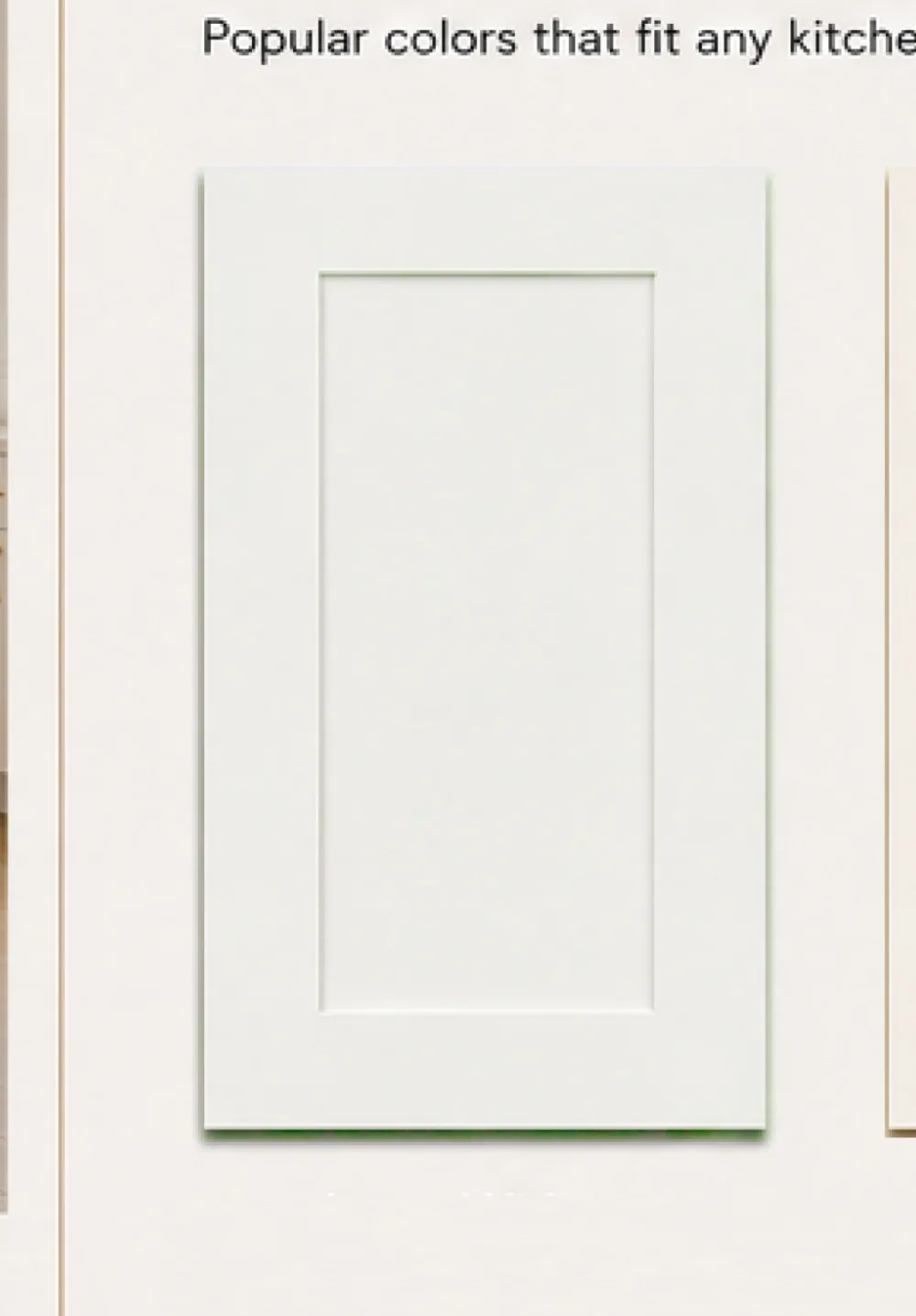
A Shaker kitchen uses a five-piece door: a flat, recessed centre panel inside a plain square frame. The style comes from the Shakers, an 18th- and 19th-century American community known for simple, well-made furniture. Shaker suits almost any home, from Victorian terraces to new builds, which is why it's still one of the most popular kitchen styles in Australia and the UK.
What makes a door "Shaker"?
A Shaker door has five parts: two vertical stiles, two horizontal rails, and a flat centre panel set slightly back. There's no decoration on the frame, no raised panel and no moulding. The look comes from the proportion and the shadow line around the panel.
That simplicity is why Shaker sits between traditional and modern. With brass knobs and marble it reads as classic. With slim black handles and concrete it reads as contemporary.
Classic Shaker vs Slim Shaker
The main variation is the width of the frame.
Both come in the same four colours. → /products/kitchen-cabinets/rta-shaker · /products/kitchen-cabinets/rta-slim-shaker
In the UK you'll also see in-frame Shaker kitchens, where the door sits inside a separate cabinet frame rather than over the front of it. That's a different construction. Ask any supplier which one they're quoting.
Classic Shaker vs Slim Shaker
| Classic Shaker | Slim Shaker | |
|---|---|---|
| Frame | Wider, traditional proportions | Narrow, a few centimetres or less |
| Feel | Timeless, homely | Lighter, more modern |
| Suits | Period homes, country and Hamptons styles | Apartments, new builds, minimal kitchens |
| Kabinly collection | RTA Shaker | RTA Slim Shaker |
Shaker vs profiled
If you like the idea of Shaker but want more detail, look at profiled doors. Their centre panel is raised and shaped, and the frame has a moulded edge. They're more traditional and suit Hamptons, Provincial and heritage kitchens. → /products/kitchen-cabinets/classic-profiled-doors
Which colours work for Shaker?
Shaker works in almost any colour, which is part of its appeal. Our standard colours:
- Shop White. Crisp and bright, for small or darker kitchens.
- Alabaster. A softer white that suits natural stone and period homes.
- Black Walnut. A deep woodgrain, great on an island or a tall bank.
- Ivory Oak. A pale oak woodgrain that adds warmth without darkening the room.
Want a colour that isn't on the list, such as a deep green island or a heritage shade? That's what Custom Shaker is for: made to order in the colour you choose. → /finishes/colour-chips · /products/kitchen-cabinets/custom-shaker
Two-tone Shaker is an easy way to add character. Try a white perimeter with a walnut or painted island, or pale wall cabinets over darker base cabinets.
Handles, benchtops and details
A good rule of thumb: the wider the Shaker frame, the more traditional the handle can be.
Handles, benchtops and details
| Choice | Classic look | Modern look |
|---|---|---|
| Handles | Cup pulls and knobs in brass or nickel | Slim bar handles in matt black or brushed steel |
| Benchtops (worktops) | Marble-look or natural stone, timber | Concrete-look or sintered stone, thin edge |
| Splashback | Subway or handmade-look tiles | Full-height stone slab |
| Tall cabinets | Floor-to-ceiling with a cornice | Floor-to-ceiling, flush top |
Is Shaker a good choice? Pros and cons
Pros
- Timeless. It has lasted for more than a century and dates slowly.
- Suits nearly every home and budget.
- Works with almost any colour, handle or benchtop.
Cons
- The recess around the panel collects a little dust. A soft cloth sorts it.
- Painted Shaker can chip on heavy-use doors. Laminate surfaces are tougher.
What to check before you buy a Shaker kitchen
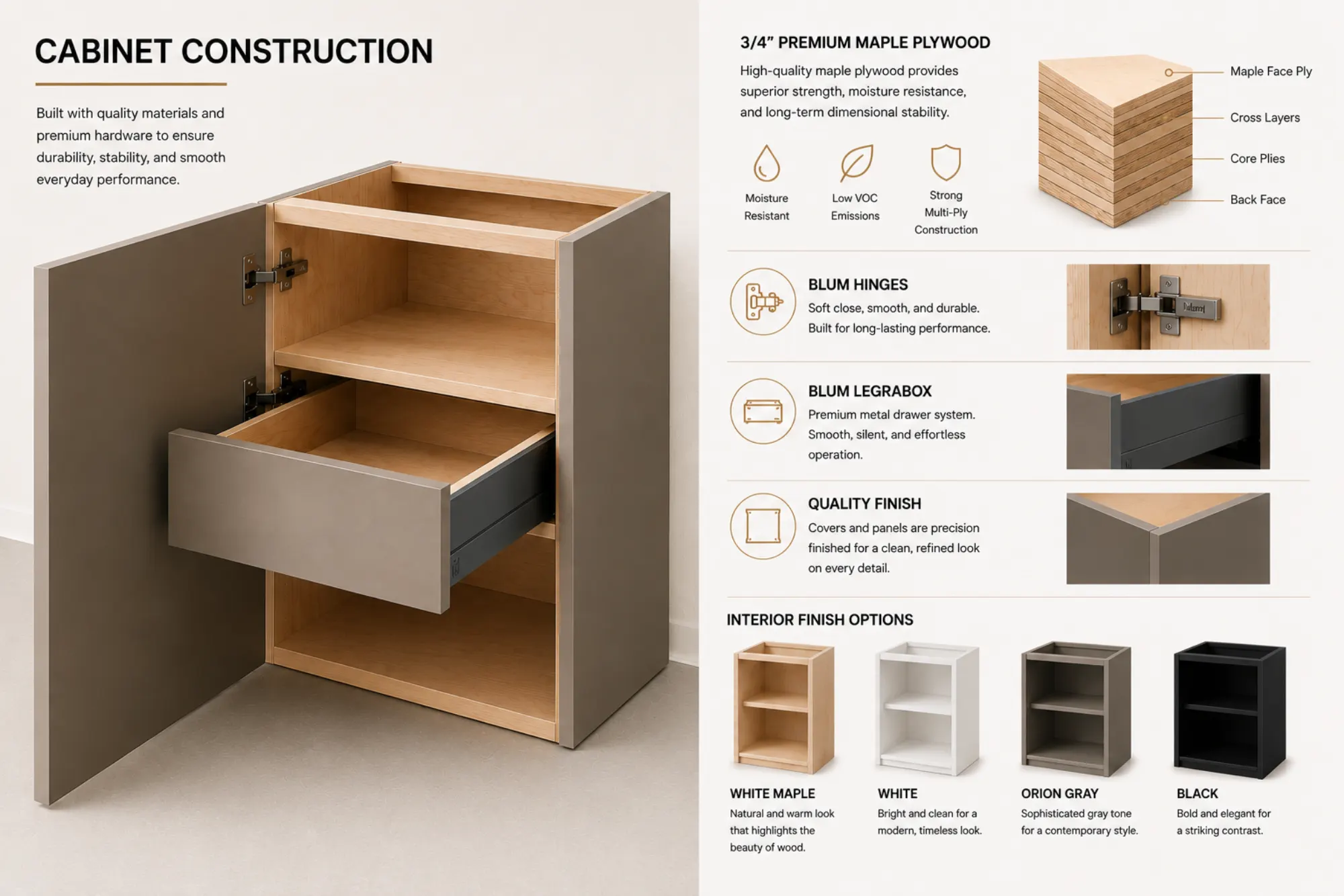
- The carcass. The door is only the front. Ask what the box is made of. Ours are maple plywood. → /blog/plywood-vs-particleboard-vs-mdf-cabinets
- The hardware. Soft-close hinges and full-extension drawers make the everyday difference. Ours use Blum. → /products/hardware-drawer-systems
- The sizes. Made-to-measure cabinets avoid filler panels, which matters more on Shaker, where the frame lines make gaps obvious.
- The finish. Painted, laminate or woodgrain? Ask to see samples in your own light.
- The quote. Make sure doors, carcasses, hardware and installation are all itemised.
FAQ
Is a Shaker kitchen expensive?
Will a Shaker kitchen date?
Is Slim Shaker just a trend?
Can I have Shaker wardrobes to match?
Start with a free measure
A local partner comes to you, measures the space and talks through what you want. No cost, no obligation.